

Historical objects reached the Museum in different ways. Most frequently they were gifted to the Museum or purchased by it. An important source of the acquired historical objects and documents were local penetrations.
The collections cover such fields as technique, ethnography, nature, history and art. They are grouped in the following sets:
About 21 000 museum objects in the stores, on stable exhibitions in Szreniawa and in the Museum branches represent material culture of the country and agriculture. The library and scientific archive of the Museum can also be proud of their valuable collections.
Presenting different sets of historical objects, we turn attention to valuable and interesting objects or collections distinguishing by the abundance of developmental forms, by interesting constructional solutions or unquestionable historical value.
The completed collections documentate quite comprehensively the problems the Museum is interested in. This chiefly concerns agriculture, agricultural industry and crafts. In this case the collections illustrate both the use of traditional methods and solutions of the 19th and 20th centuries.
In the group of technical objects the most valuable is a set of traditional farm tools from different regions of Poland made up by Prof. Stefan Biedrzycki. These are forks, spades, diggers, sulky ploughs, primitive wooden plows with an iron blade and ploughs. In the set of tillage implements, for instance, such objects as an iron "Wrzesiński" plough from about 1880, a swing plough from the second half of the 19th century, and a "Record" plough manufactured at Cegielski Plant and awarded by the German Agricultural Chamber in 1914, attract attention.
The Museum has 3 survived steam locomobiles for plough drive (Heucke, Kemna) from 1913 and 1927 and a shuttle plough. These are the only specimens in Poland. In the set of sowing and planting implements and machines, valuable constructional solutions are represented by a wooden barrow seeder for grasses of H. Cegielski production from the turn of the 19th century and by a centenary Garret drill. Among the implements for cereal and grass harvesting, a horse binder of Massey-Harris Co. from 1895 and the original model (in l:1 scale) of the first McCormick’s harvester from 1831 are deserving of attention. This model was made in 1931 on the occasion of the 100th anniversary of the harvester invention. The collection of scythes and sickles from the Car Plant in Bielsko-Biała should also be mentioned here. This is a unique collection of products of Starobielska Scythe Plant in Wapiennica as well as a unique set of models made at foreign factories (chiefly Austrian). The collection core are harvesting and special scythes (for cutting grass and bulrush in fish ponds). The collection is supplemented with a film entitled "The last smithy of scythes" showing the process of scythe production at Starobielska Plant.
Various technical solutions concerning threshing are illustrated by a rich collection of threshers produced by different firms and especially Polish produced by Moritz (Lublin), H. Cegielski (Poznań) and Unia-Ventzki (Grudziądz). The only survived specimen of the first combine harvester S-4 produced in 1958 in Poland should also be mentioned.
Interesting constructional solutions from the technical and historical points of view are presented on the example of Ursus and Lanz tractors as well as by other American, Czech, German and Polish constructions.
The use of draught animals is associated with the so-called horse gears, which can also be seen at the Museum.
Beside locomobiles for farm machine drive, of interest are also steam stationary machines (of Polish and German production) used for moving distilling equipment. The oldest of them in the Museum collection is that from the distilling plant in Objezierze produced by H. Cegielski Plant in Poznań in 1868.
There is a considerable number of the museum objects dealing with plant tending, melioration, fertilization, with hand and machine harvesting, sorting and cleaning of root crops as well as with plant protection. The last group of the collection items has the oldest apparatus for aeration decorated with Grand Prix at the exhibition in Torino in 1911. The most interesting and attractive to visitors are two aeroplanes "Gawron" and "Kukuruźnik" used for plant protection by dusting cultivated fields and forests with agrochemicals.
Among numerous objects connected with animal husbandry and breeding attention is drawn by leather shod shoes for oxes from the turn of the 19th century used during travelling on roads as well as by wooden shoes for horses called "klumpy" facilitating their movement in marshy areas. There is an imposing collection of horseshoes of various types, including those of famous racing horses from the years 1885-1905. Tools for animal branding belong to very rare objects. Of interest are devices for burning numbers on the skin of animals obtained from the former horse stud of count Łącki in Posadowo and used before 1939. There also survived incubators (for chicken hatching) of American Buckey firm, which were heated by kerosene lamps. There is a great diversity of veterinary tools and equipment used for taming animals and for procedures of general surgery, orthopedics, castration as well as for ear and tail cutting and for blood loss. The most interesting of them were produced by H. Hauptner company in Berlin and J. Jodłowski company in Warsaw. A curiosity is a box for sulphur steam-aeration of horses infected with skin parasites. The box was used in the Polish army in the thirties of the 20th century.
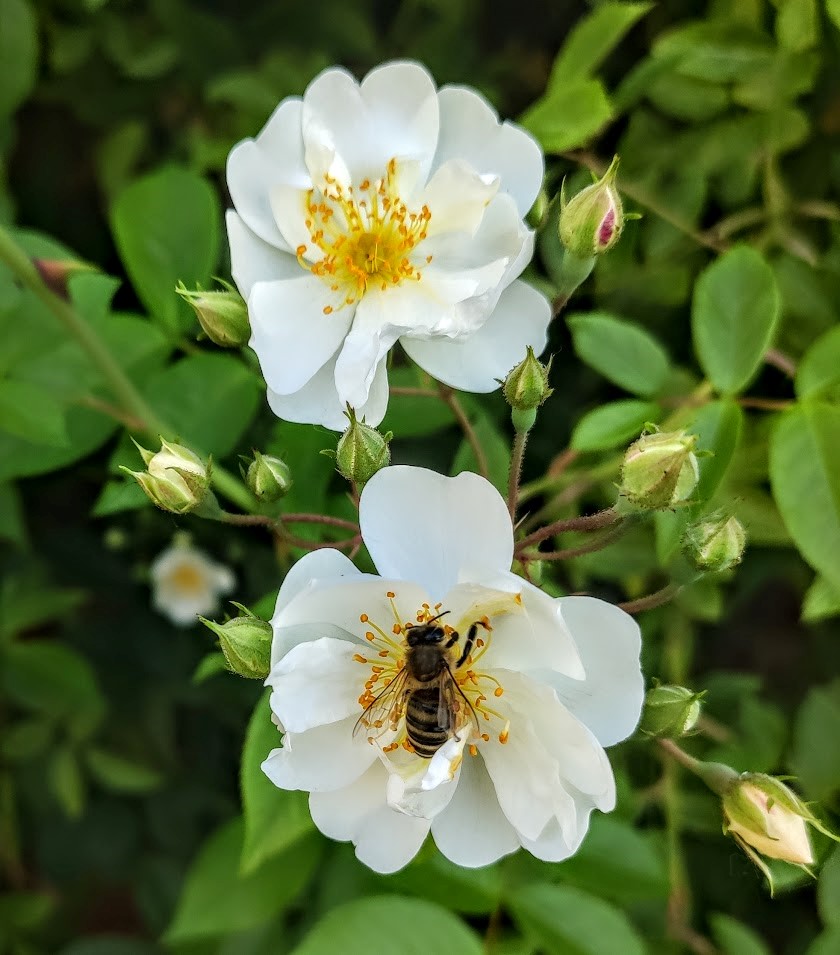
Compact and fully representative are the collections dealing with keeping of wild forest bees and apiculture. Besides beehives of different types (made of straw or tree logs and box-shaped) and original bee-keeping, these collections contain numerous tools and implements. The most valuable, among others, are skewer and storied beehives designed by the priest Jan Dzierżon and three types of beehives designed by Kazimierz Lewicki, who directed the Bee-keeping Museum in Warsaw in the second half of the 19th century .
A considerable number of historical objects was collected in the field of water and land transport and communication. This exhibit includes bast shoes, crampons, skates and skies. There is also a bicycle from 1890-1900 made by a rural craftsman after a factory design. The most valuable part of the collection are wheeled vehicles (farm and out-going carriages, waggons) demonstrating different technical constructions and regional varieties. There is quite a large number of sleds used for farming and sledges for travelling. Besides that, the Museum has managed to assemble an interesting collection of yokes for cattle as well as horse harnesses of different types. A cart with a wooden cover pulled by horses from a narrow-gauge field railway deserves special attention. It was used for carrying beets to a sugar plant or potatoes to a distilling plant.
Animal husbandry and breeding are connected with bells, the number of which in the Museum collection is 67. They include pasture bells and those used in winter carriages drawn by a team of horses. Bells used in winter carriages are very different in shape, size and decoration as well as in produced sounds.
A separate exhibit in the Museum collections is formed by objects dealing with processing and agricultural-food industry. They originate from almost all regions of Poland and show production processes and the level of technical solutions. This exhibit includes quern grain mills used for the production of flour and groats, grain crushing mills and mills. An interesting collection of windmill models by the engineer Feliks Klaczyński from Poznań is worth mentioning. It numbers 43 specimens, each being a true reproduction of an object, which does not exist any more or has survived up to our times. An extremely valuable material supplementing the windmill models are picture negatives, photographs, descriptive and architectonic documentation of windmills, drawings, maps, prints, handwritten notes accumulated for dozens of years by Feliks Klaczyński.
Home baking is represented by two freely standing ovens for bread and by one mobile oven. ln addition to them, there are various implements for bread making, forms for wafer-making, measures and sieves. Fruit and vegetable processing is connected with pots and devices for drying, for making jams, sauerkraut, pickles and similar products.
The collection of historical objects dealing with oil production is arranged quite comprehensively, making it possible to understand the basic types of farmer’s and small-town oil mills as well as various forms and regional varieties of implements used in oil production.
The Museum interests also concern distilling. This collection includes the equipment and single specimens of devices used for production of alcohol at distilling plants, for transportation of barrels and for rinsing raw material.
The exhibit representing successive stages in the development of dairy is arranged in an interesting manner. It consists of wooden containers for milk yield, for its storage and settling, cream separators of different construction, churns of different types, pressers for squeezing out cottage-cheese. The Museum also accumulates dairy machines (usually plant-produced), which were used in dairy shops.
The next branch of food processing in the country is butchery. It is represented by different devices used for slaughtering, evisceration and production of pork butcher’s products as well as for meat storage and preservation (ice refrigerator cooled by natural ice). The collection of the equipment dealing with sugar industry and potato processing is small. The most interesting in it are boiler lids produced by Borman-Szwede Co. in Warsaw, a form for production of sugar-cones called "rafinadka" and a cylindrical drier for potato flakes.
Extremely important to the Museum is the presentation of laboratory equipment used by processing plants for fundamental chemical analyses and specialized studies.
Exhibits of implements and products dealing with rural crafts (cooperage, wheelwright’s work, joinery, carpentry, saddlery, tannery, smithery and weaving) should be referred to extensive collections of the Museum. Crafts connected with woodworking are also represented by numerous implements and products. The most valuable are 19th century carpenter’s axes, pit-saws, tools for trunk debarking as well as two wooden jacks (levers) for lifting up corners of wooden houses or bridge spans. This exhibit also includes tools and implements indispensable in a blacksmith shop, which differ in their construction and regional varieties. Two anvils with a rich ornamentation from 1564 and 1644 and one anvil from 1798 distinguish in this collection. The Museum has succeeded in accumulating all types of implements and devices used in natural fibre processing for linen, woolen cloth and rope-making. Implements for flax processing, thread and fabric weaving are characterized by a large diversity in their technical aspect, ornamentation and functions.
Among ethnographic objects an important position is held by folk art, and a criterion for choosing accumulated items is their artistic level and iconographic values. The basis of the collection are wood carvings and bas-relieves with genre scenes reproducing everyday life and the work of farmers and craftsmen. The diversity of forms, functions and abundant ornamentation are characteristic of ceramics. There are also few examples of decorative and other fabrics, regional costumes, embroideries, decorative paper cut-outs and glass paintings.
Historical objects of country furniture making constitute a separate set. Dowry chests with a colored painting and decorative ornamentation as well as coffers are the most attractive in this collection.
Artistico-historical collections comprise several interesting and valuable exhibits, such as: banners of various agricultural societies and organizations, awards and badges, seals and stamps, cups, coins, medals and pieces of art. In the group of awards the most interesting are insignia of the power: of chief officers of a group of villages, village administrators and aldermen from the years 1815-1939. The beginning of this important collection are assembly bells, which were formerly used in estates to mark the time of work. The oldest bell originates from the year 1795. The Museum esteems the historical value of clearing-survice tokens used in farming. They formerly fulfiled the function of a private money substitute in estate wealth. Most of them were pressed and beaten on metal or printed and hand-written on paper and cardboard. These specimens collected by the museum originate from the end of the 18th century as well as from the 19th and 20th centuries. Medals collected by the Museum are closely connected with the country, farming, hunting and fishing. Numerically dominant are medals from agricultural exhibitions, and just these medals are of high artistic value.
Pieces of art cover first of all paintings, graphics, sculpture and artistic fabrics. Their authors are representatives of different artistic generations producing their works of art from the 18th to the 20th centuries. But the common subject and fascination with country life join them together. The oldest pieces of art are those by: Aleksander Orłowski, Jan Eliash Ridinger, Wojciech Gerson. Compositions of Jan Stanisławski, Julian Fałat, Bronisław Olszewski, Wincenty Wodzinowski, Kazimierz Sichulski, Zofia Stryjeńska, Leon Wyczółkowski, Józef Chełmoński, Jan Szancenbach, Alfred Lenica, Maria Z. Dawska are deserving of distinction.
Library collections are accumulated on account of their suitability for the current work at the Museum, for studies on the history of the country and farm husbandry. The present collection comprises books dealing with the history
of agriculture, animal breeding and husbandry, agricultural-food technology, farm history, ethnography and art. The book collection numbers 33 thousand volumes. The most valuable part of this collection are old prints from the 16-18th centuries. Collections of scientific archives include original hand-written acts, prints, typed manuscripts and duplicated documents covering the period from the 17th to the 20th centuries. Valuable items are: official documents attesting land purchase or sale, authenticated and judicial deeds, diplomas, certificates, diaries, village maps and plans of estate wealth, posters and leaflets. Iconographic archives comprise the following materials: photographs including historical pictures before 1939, slides, films and postcards. The basic criterion in arranging this collection was the main subject - agriculture, the history of the country and its culture.